
7th March, 2026 : Awareness Session on Women's Rights and legal framework on the occasion of International Women's Day.
- teamdhwani
- Mar 9
- 2 min read
Updated: May 20





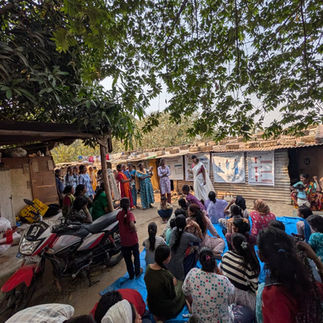
On 7th March 2025, Dhwani Legal Trust conducted a legal awareness programme in a informal settlement at Whitefield, Bengaluru. Organized by the Robin Hood Army, the initiative aimed to empower women by spreading awareness regarding their legal rights and critical health-related issues.
Adv. Archana Casmir, Legal Awareness Corodinator addressed the gathering of around 40 women explaining the essential legal protections available to them. A key focus was women’s rights, workplace safety and the prevention of sexual harassment. She guided the participants through their rights under the Sexual Harassment of Women at Workplace (Prevention, Prohibition and Redressal) Act, 2013, emphasizing that every woman deserves to work in a safe and respectful environment. The women were encouraged to speak up and seek professional help if they ever encounter harassment.
Another vital topic was domestic violence. We discussed the various forms of abuse covered under the Protection of Women from Domestic Violence Act, 2005 including physical, emotional, and economic abuse. The participants were briefed on available legal remedies and the importance of reaching out to authorities or legal professionals when facing such situations. She also touched upon the Karnataka’s Menstrual Leave Policy, though they were from the unorganised sector at least for them to know that such a bill exists was important.
In addition to the legal sessions, Goonj, an NGO conducted an educational workshop on the menstrual cycle and menstrual hygiene. We supported their efforts by assisting with translation, ensuring the information was clear and accessible to every woman present.
To conclude the programme, volunteers from the Robin Hood Army distributed protein bars, sanitary napkins, and packets of chips to the children. Our team assisted in the distribution, furthering the effort to support the community and promote menstrual hygiene awareness among women and girls.
The programme was highly interactive; many women actively participated by sharing their concerns and asking insightful questions. We patiently addressed each query, providing the necessary guidance and support.
Overall, the initiative was a meaningful step toward empowering women through legal literacy and health awareness. Such programmes are essential in bridging the gap between the law and the community, ensuring that individuals especially women and children from economically, socially and culturally weaker sections are aware of the protections they are entitled to.


Comments